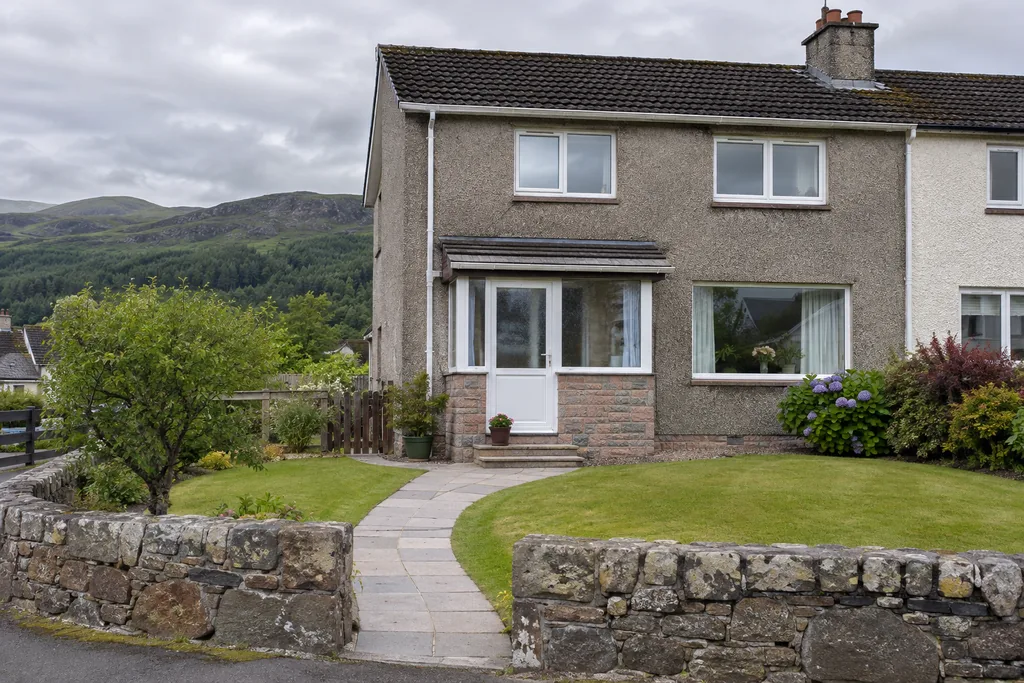
Garden paths
in Inverness
Paths and steps that clear easily after snow and do not turn to glass in a frost.
- Wide enough, with landings on any steps
- Slabs, sandstone, porcelain or blocks
- Call for advice, or use the short form
Only your own paths
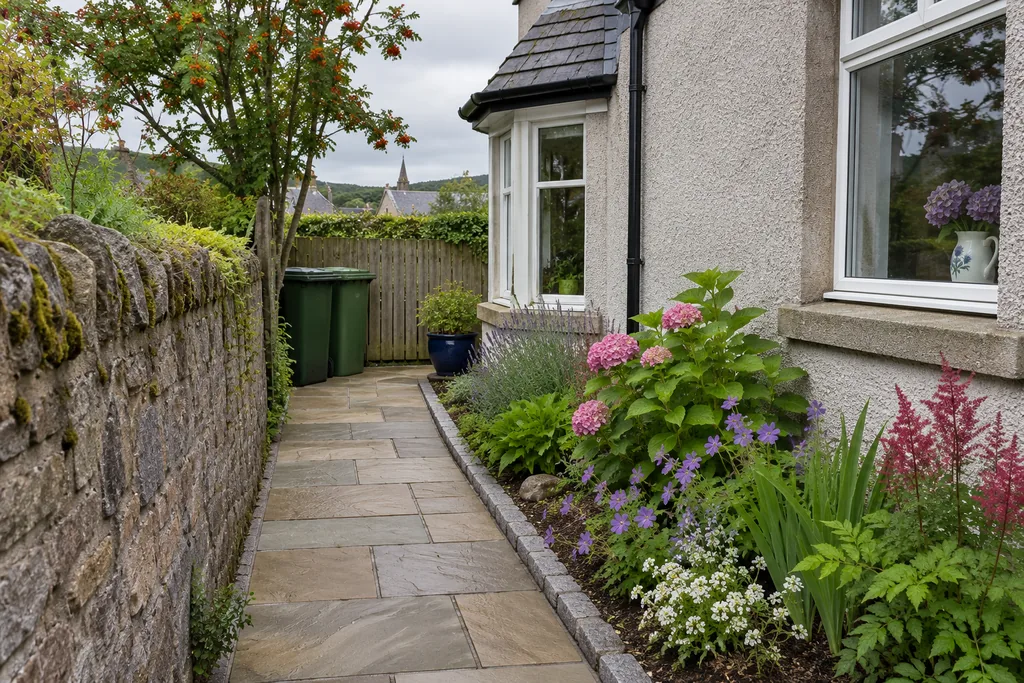
We build paths in private gardens. Pavements, cycle tracks and core paths belong to Highland Council, and we do not touch them. If a public path outside your house is damaged, report it to the council.
How wide, how smooth, how steep
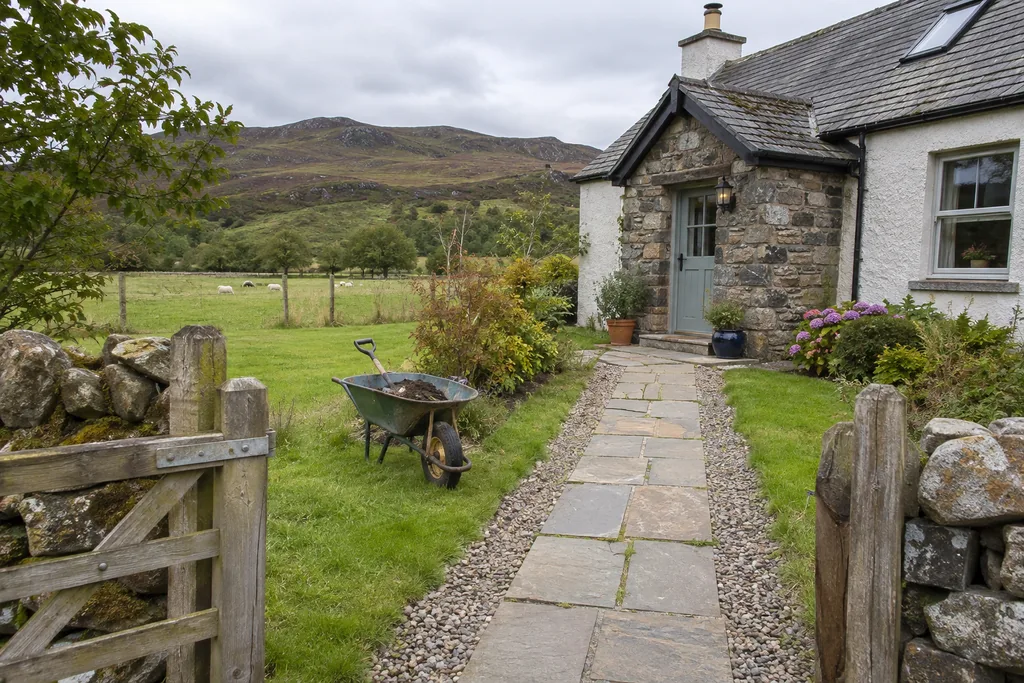
A path to a step-free door stays shallow and finishes flush with the threshold.
Steep plots, steps and a safe landing
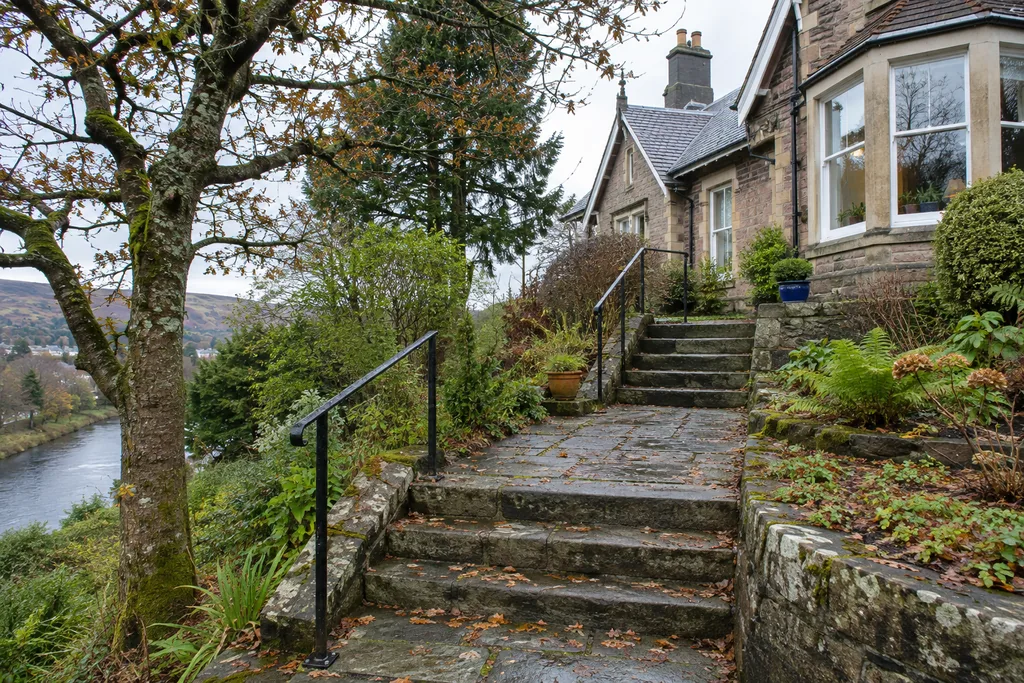
Many Highland gardens climb or fall. We prefer a shallow zigzag, or a few steps with a level landing between runs, over one long flight that is hard on knees and treacherous when iced.
Which material for a path?
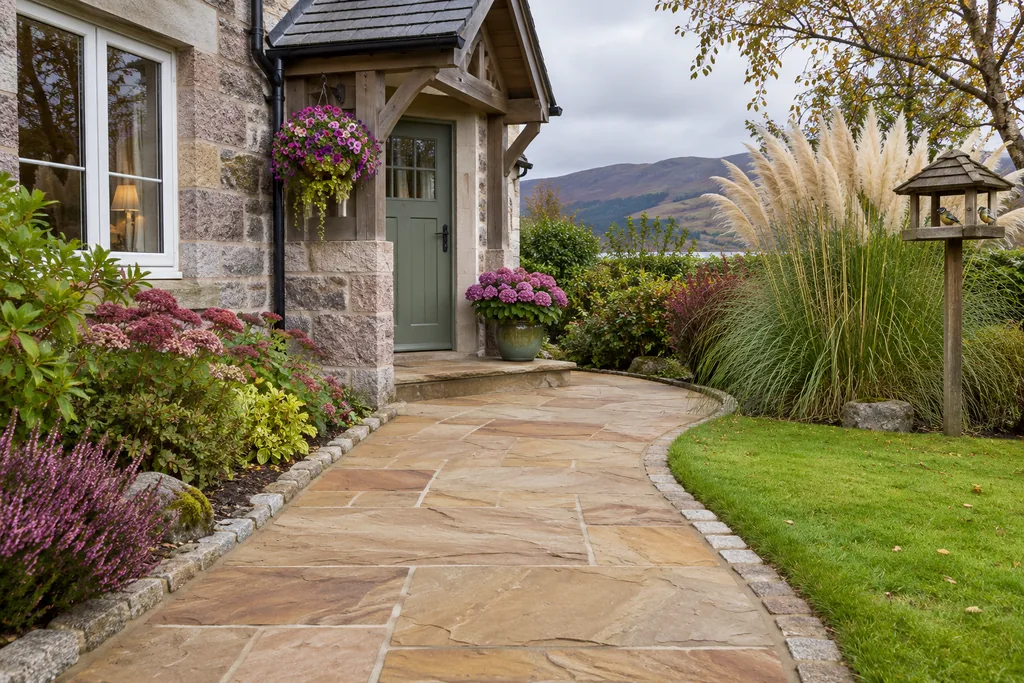
Sandstone
Textured face with grip, and it ages well.
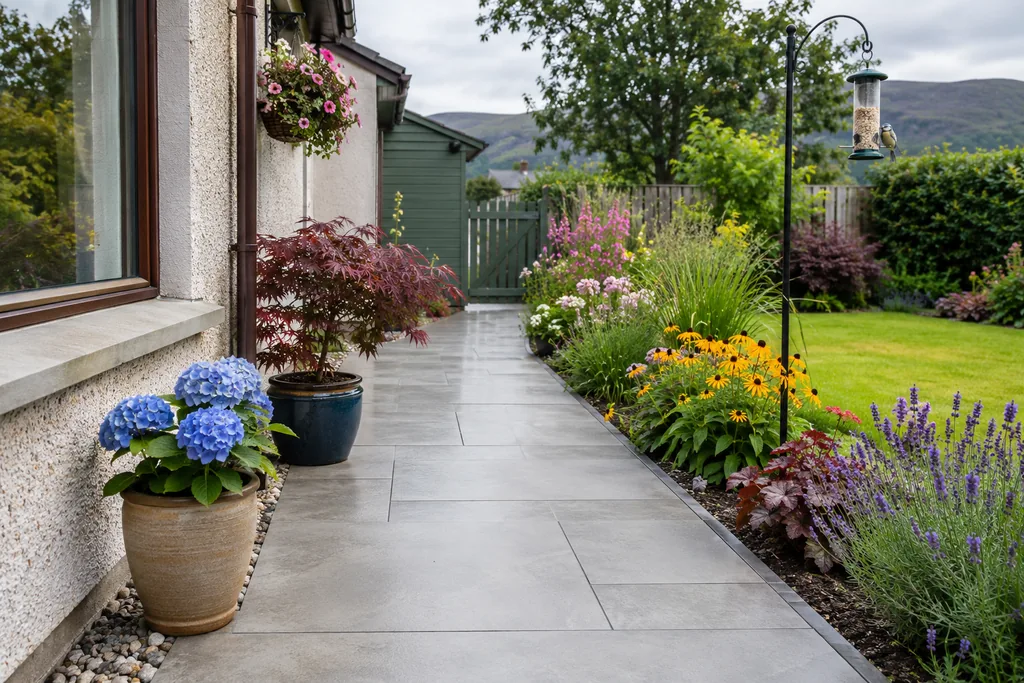
Porcelain
Smooth and tidy; ask about its slip rating.
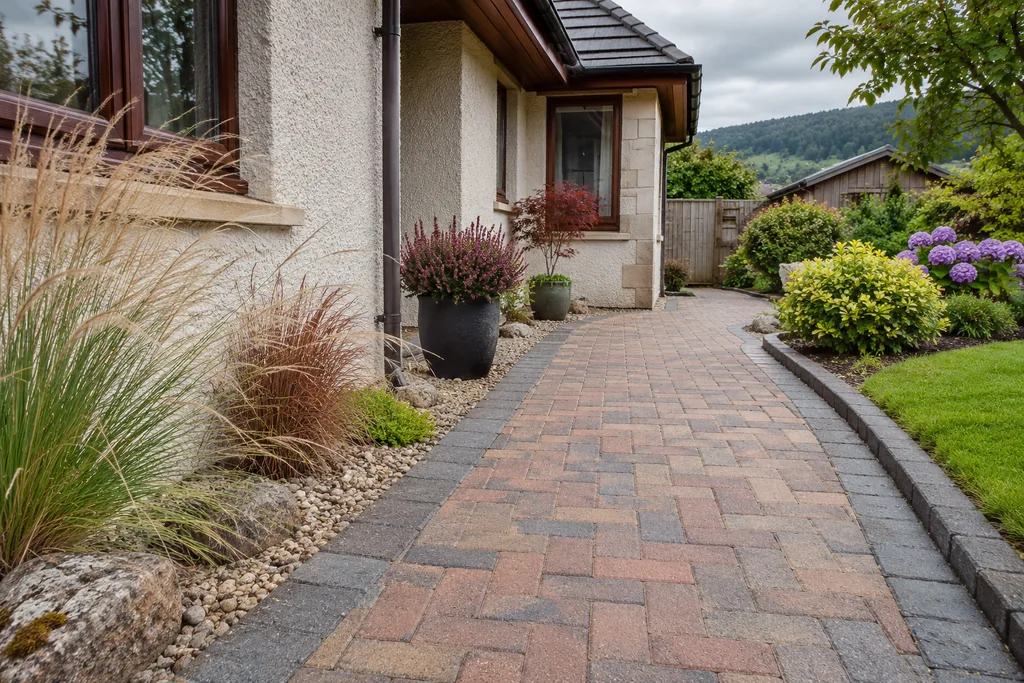
Block paving
Flexes with the ground and lifts if a pipe needs work.
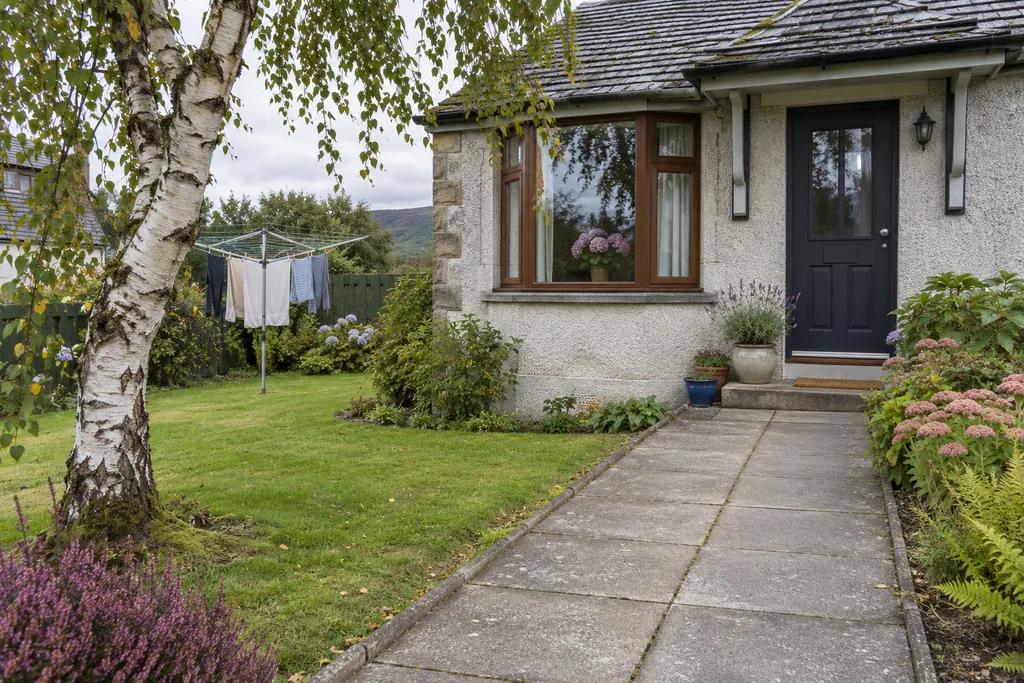
Concrete slabs
The lowest cost; check they are frost-rated.
Paving styles compares the options, and a patio can match the path.
Garden path questions
Can you replace a gravel path with slabs?
Yes. The gravel comes out, a proper base goes in and the slabs are laid to a fall. Gravel on its own cannot be paved over.
How do I stop a path icing up?
You cannot stop it entirely. A gripped surface, a gentle fall and no pooling water make it far less likely. Take care with de-icing salt on natural stone and ask the supplier first.
Does a garden path need consent?
A garden path is normally a minor job, but a conservation area or a listed house changes that. Check with Highland Council, see the Scottish Government's hard surfaces page.
Can you build steps in the path?
We plan steps with a landing between short runs.
How long will a path take?
It depends on the length, the slope and the weather.
Who do I ring about a path?
Ring 07700 175069, or use the form.