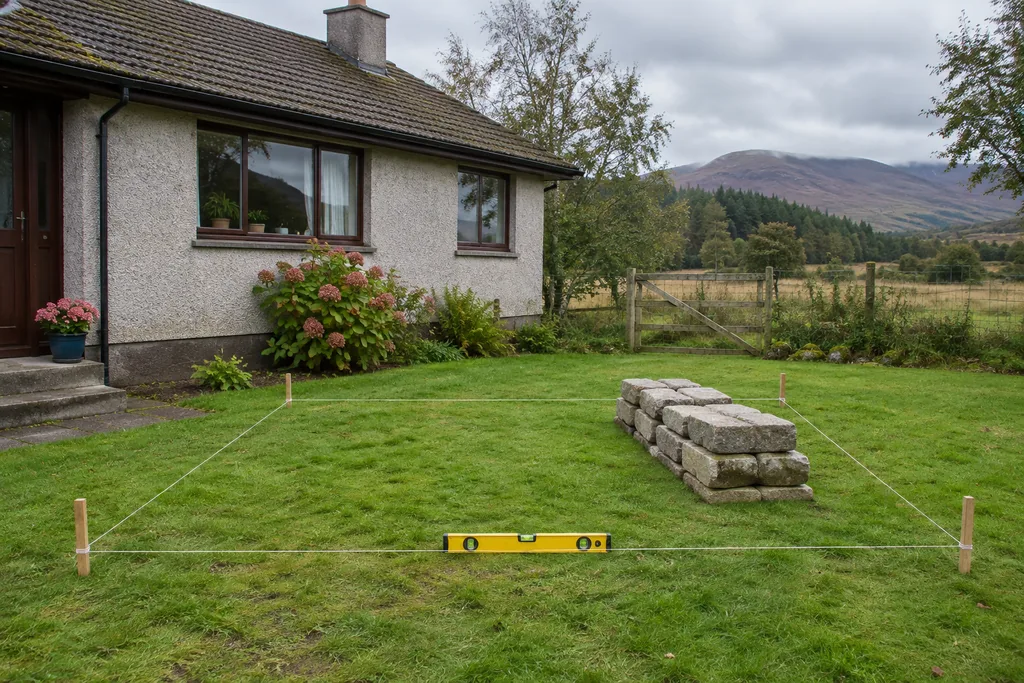
Paving installation
in Inverness
A paving job in three stages, planned around Highland ground and weather.
- Measure, dig, build the base, then lay
- Drainage and falls decided first
- Call us, or send a short form
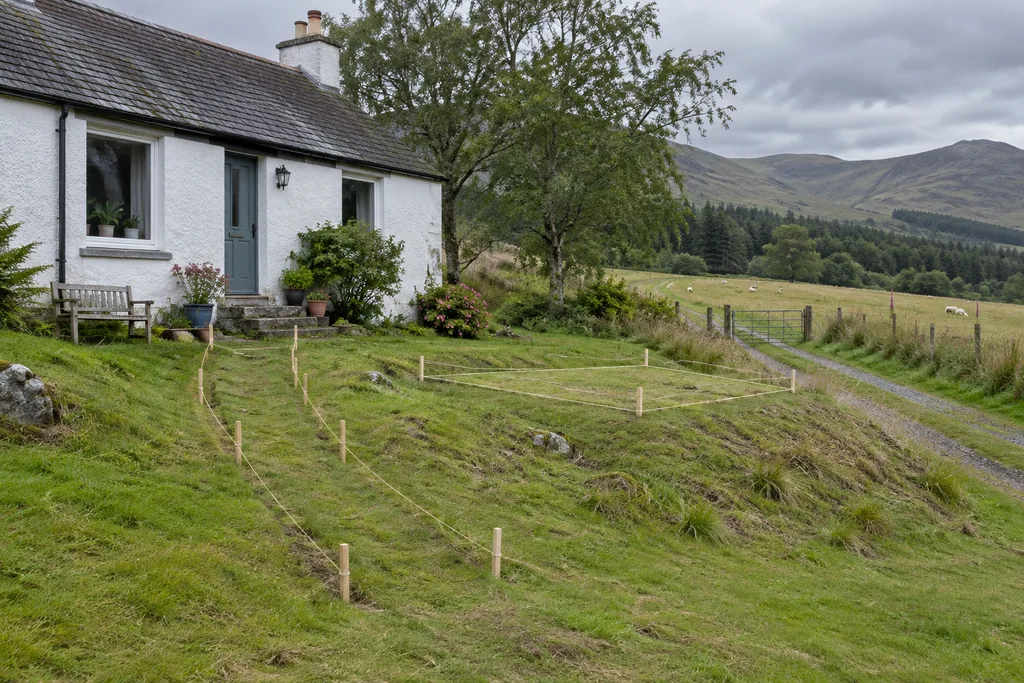
First: look at the ground
Before any digging we walk the plot: where the water goes today, how the ground slopes and how the materials get in.
Soft, boggy or clay ground changes the base depth, so we say so at this stage.
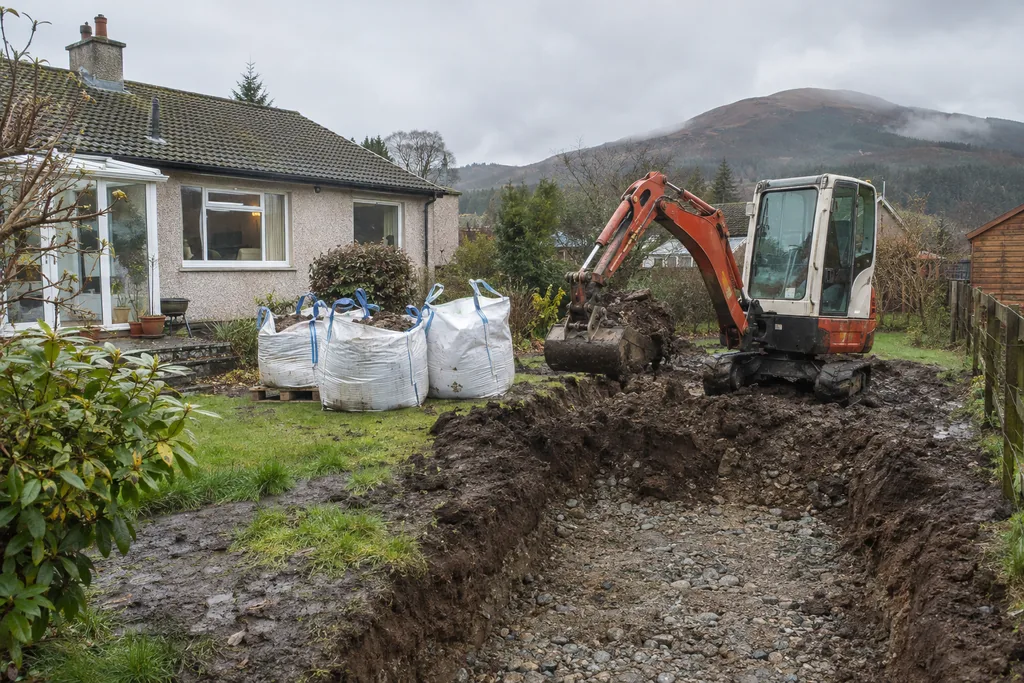
Second: dig and build the base
Out comes the turf, soil and any old gravel or concrete, down to firm ground. Then the base goes in.
A drive base is thicker than a path base, and a wet spot gets more. A free-draining base is the best protection against frost lift.
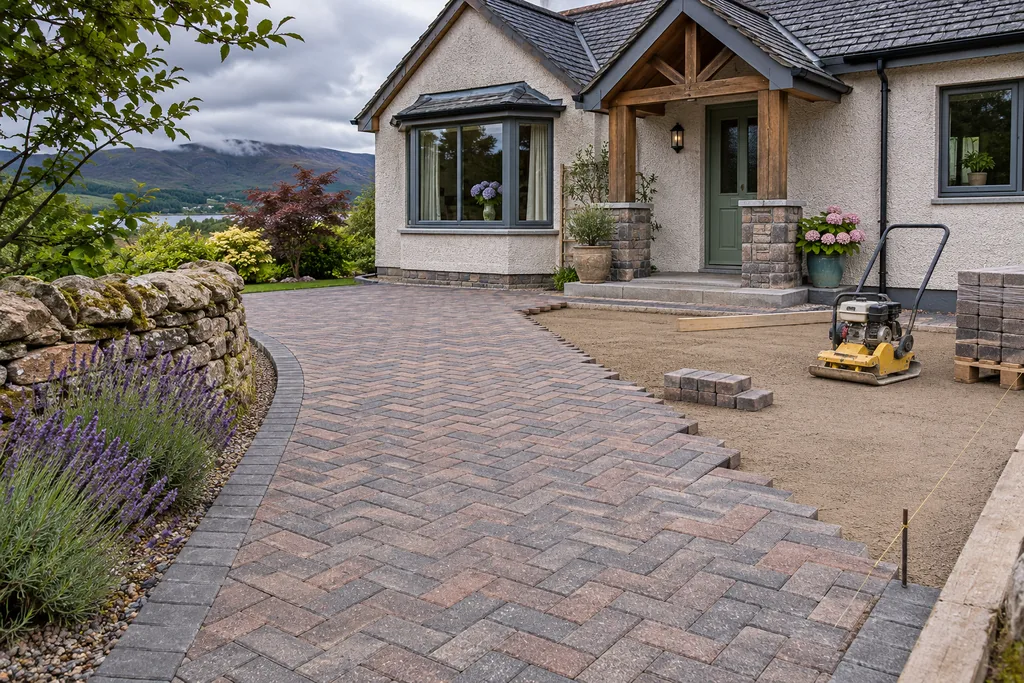
Third: lay, joint and clear up
Slabs are bedded and tapped level, and blocks go down in their pattern and are vibrated with a plate. Joints are filled and swept, and the site is cleared. We try not to lay in a hard frost, because bedding and joint fillers may not set.
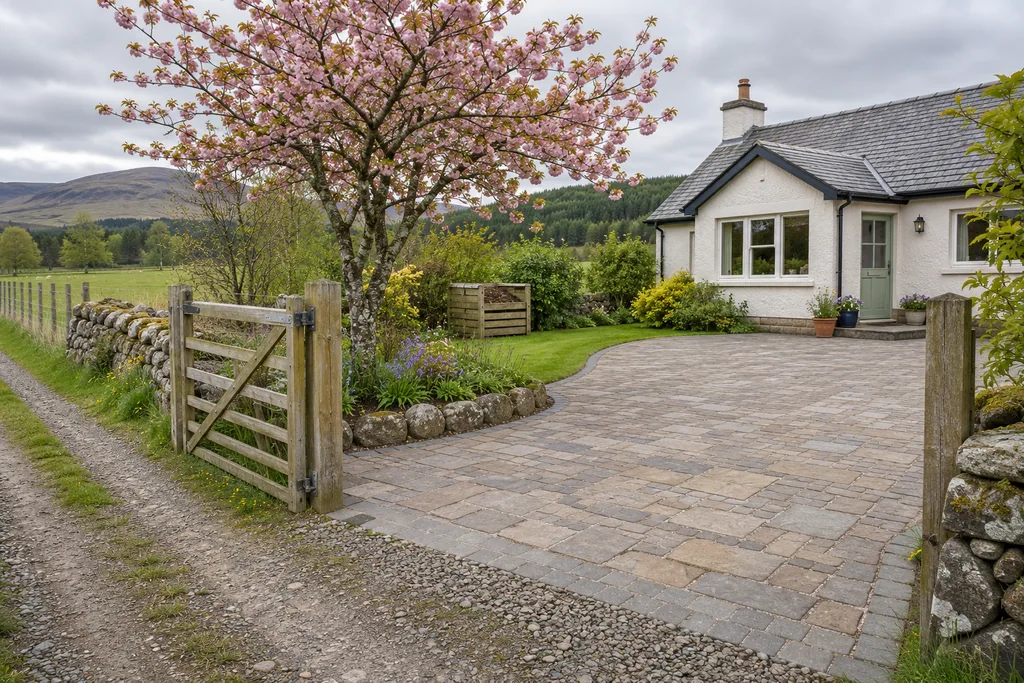
Jobs for you before work begins
- Permissions. Check conservation area and listed building status with Highland Council. A drive over the pavement needs the roads team to say yes first.
- Services. Tell us about any soakaway or field drain.
- Access. Say how a lorry gets in, and where it can turn.
Paving installation questions
What happens in the first visit?
We look at the ground, measure up and talk through the options.
Can you install paving in winter?
Sometimes. The ground and weather decide. A hard frost or a downpour can stop work. We would rather lose a day than lay something that fails.
How long will my job take?
Size, ground and weather decide it. We give a timing after seeing the plot.
Will you take away the old surface and soil?
Yes, in most cases.
Who arranges the dropped kerb?
It depends on the job. Highland Council says a drive across the pavement needs a road opening permit (council roads page, last modified 30 April 2026).
Can I stay at home while you work?
Yes. We will explain which areas are in use.