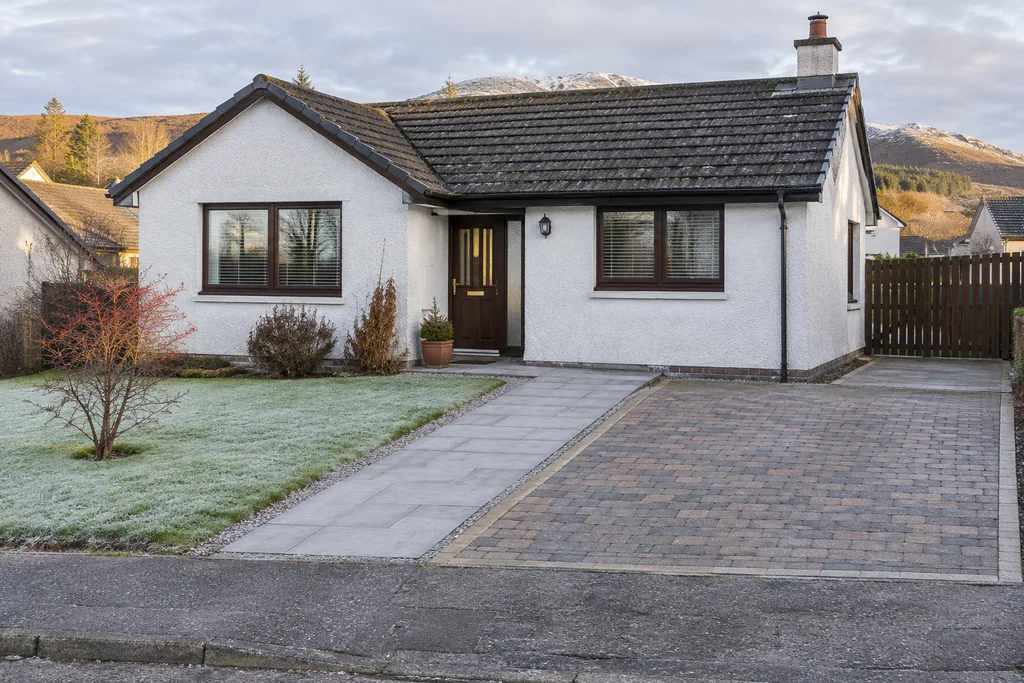
Paving
in Inverness
We lay patios, paths and block paving that stand up to Highland frost and rain.
- Frost-safe base and a proper fall for water
- Bungalows, villas, cottages and new builds
- Phone first, short form if you prefer
Pick the surface that fits your garden
Five kinds of paving work, each with its own page. Start with the one that sounds like your problem.
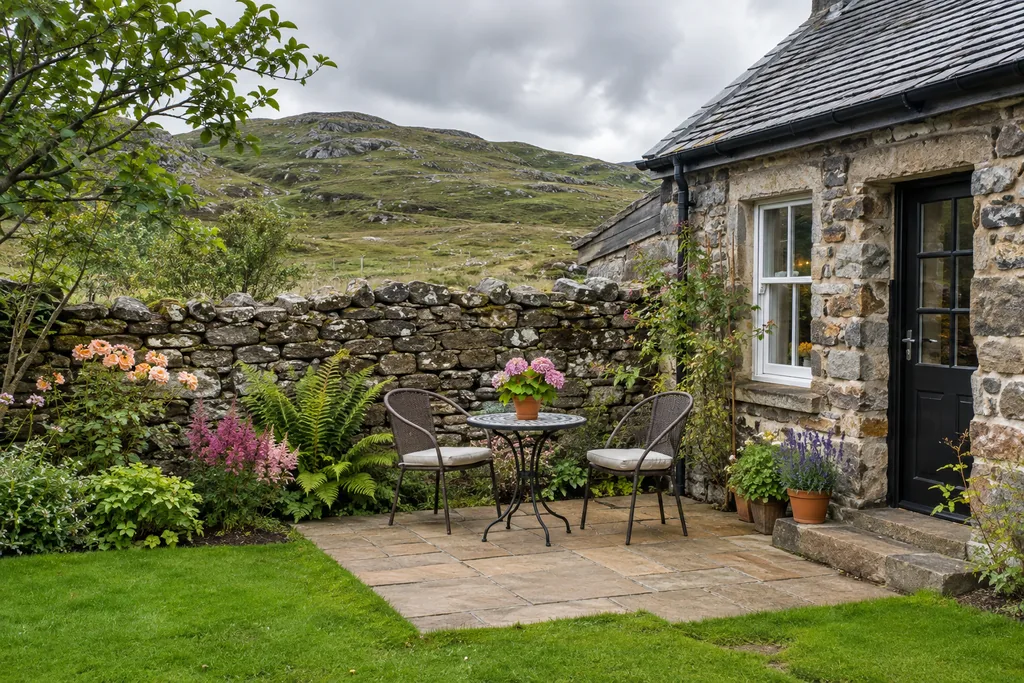
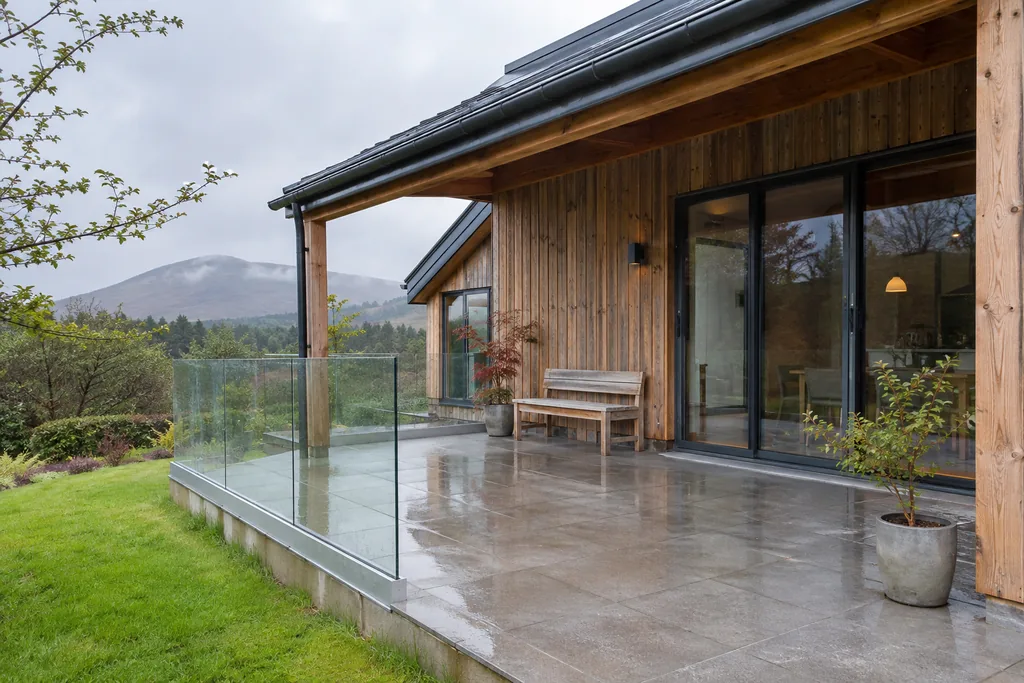
Patios.
A level, dry sitting area for a Highland summer evening and a damp October.Patios in Inverness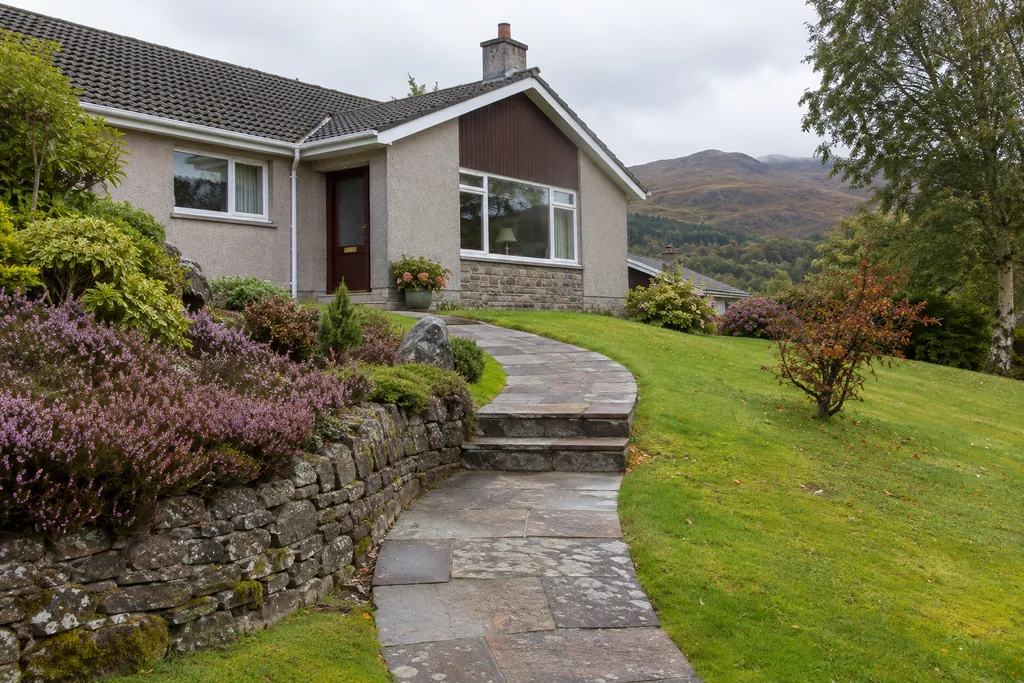
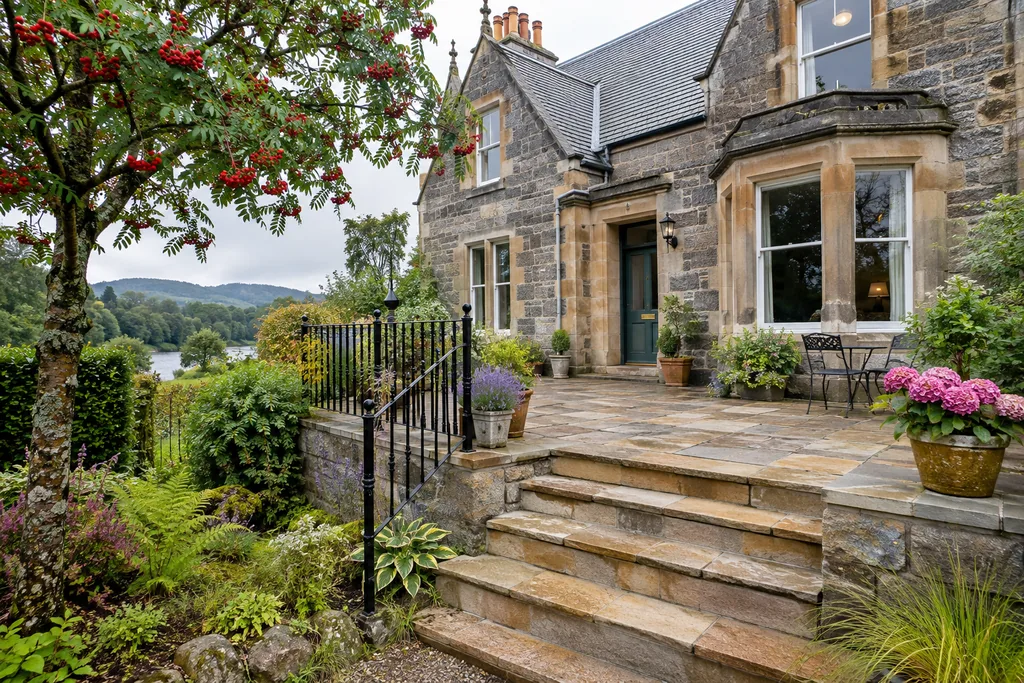
Paths and steps.
A safe route from the gate to the door, with a landing before any steps.Garden paths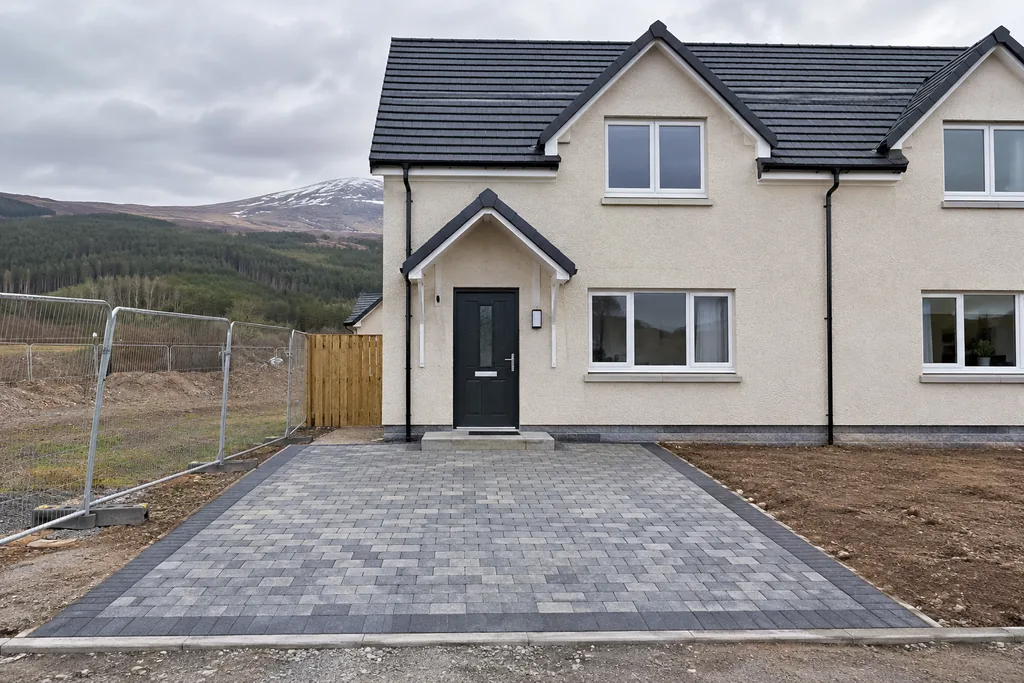
Highland weather is the brief
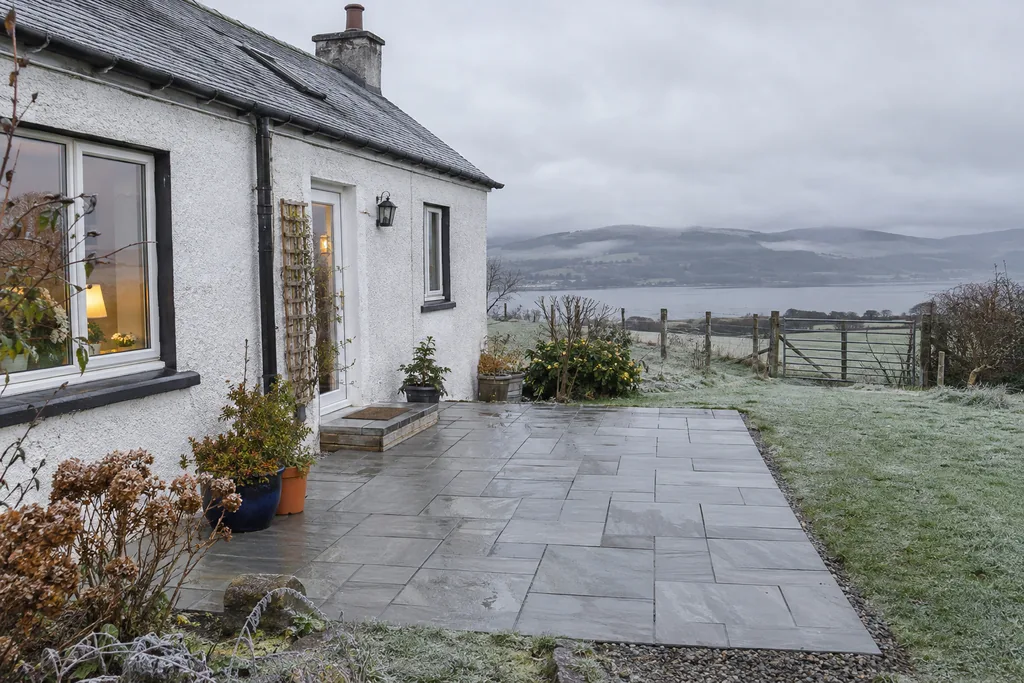
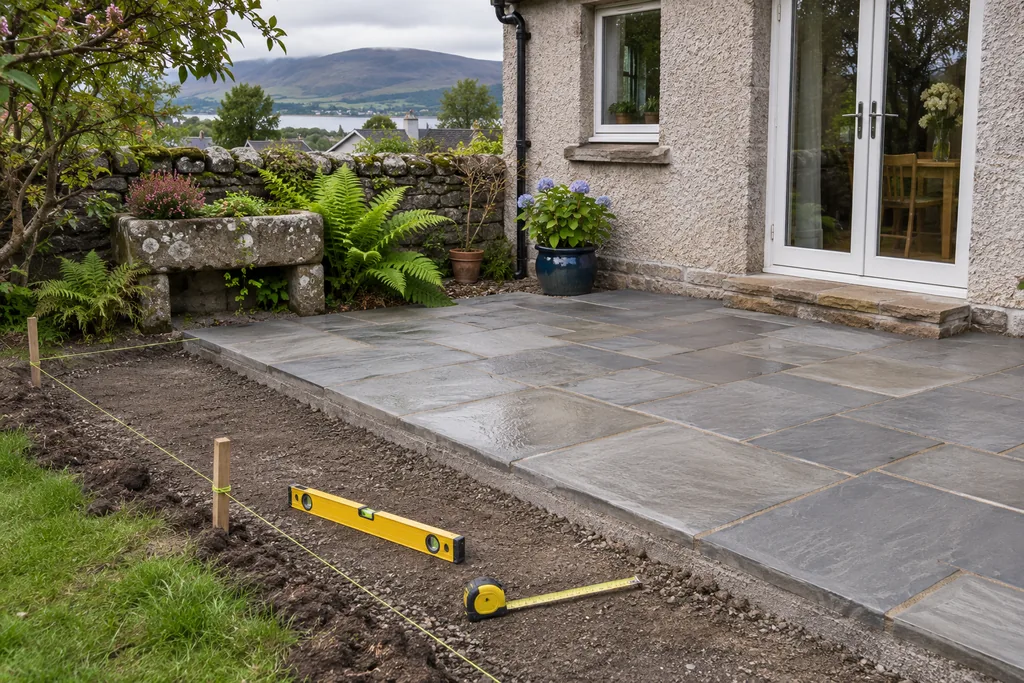
A patio in Inverness is judged by its first hard winter. Water that cannot leave the paving turns to ice in the joints and lifts the slabs, so we work back from the weather: a free-draining base that sits below the frost, and a fall on every surface.
Gravel that has had its day
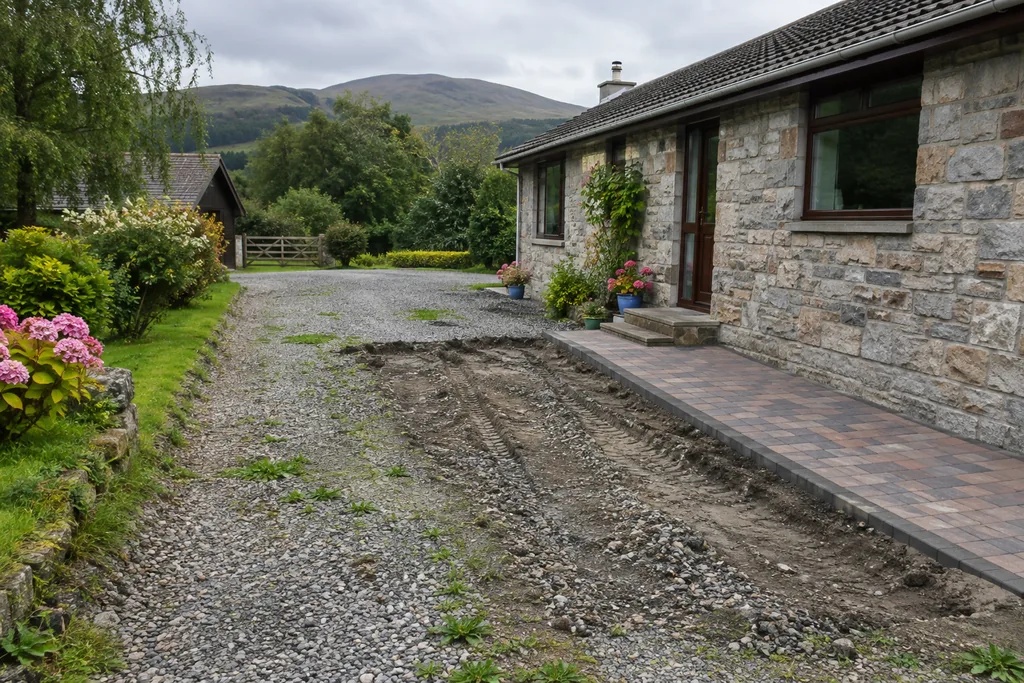
Gravel creeps into the road and the lawn, fills with weeds and ruts where the car turns. Swapping it for paving is one of the jobs we are asked about most. Our guide to replacing a gravel drive covers the steps.
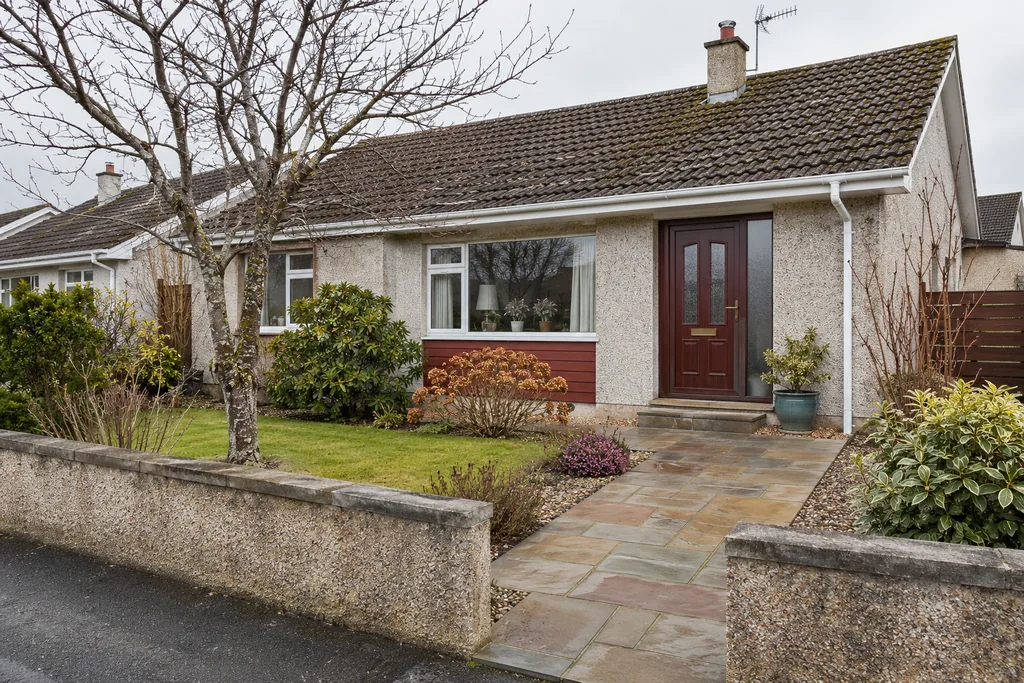
Harled walls, stone walls and low bungalows
Highland homes differ, and the paving has to meet each one properly.
- Harled walls. Paving finishes well below the damp-proof course.
- Stone cottages. Digging stays clear of shallow footings.
- Bungalows and new builds. Every fall runs away from the door.
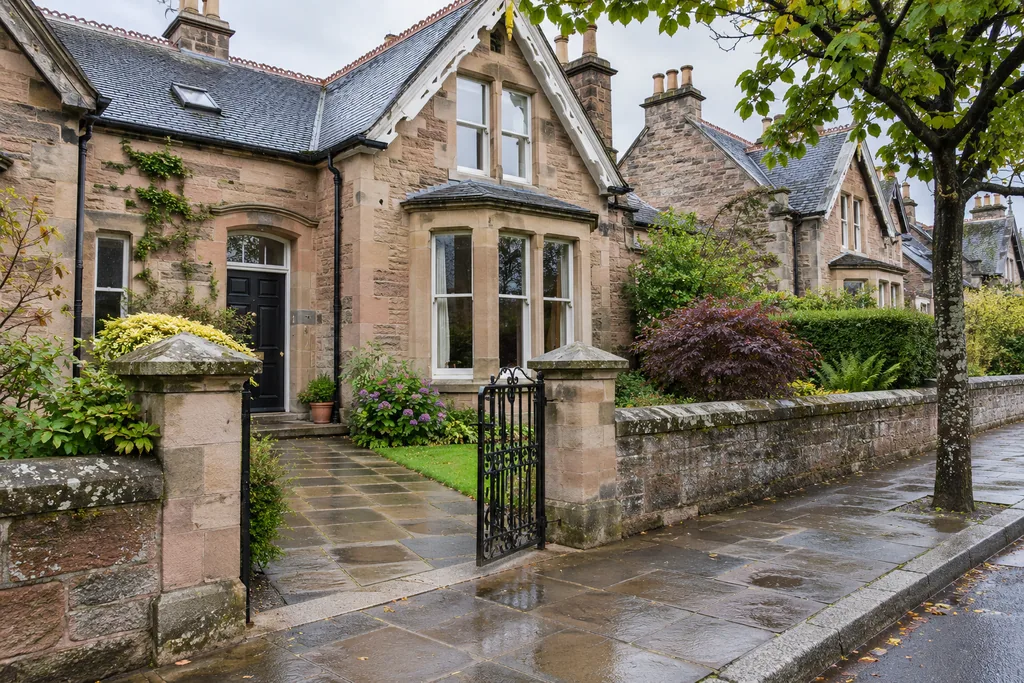
Ask Highland Council first
A hard surface often needs no application, but permission is generally needed between the house and a road, or in a conservation area. Ask the council.
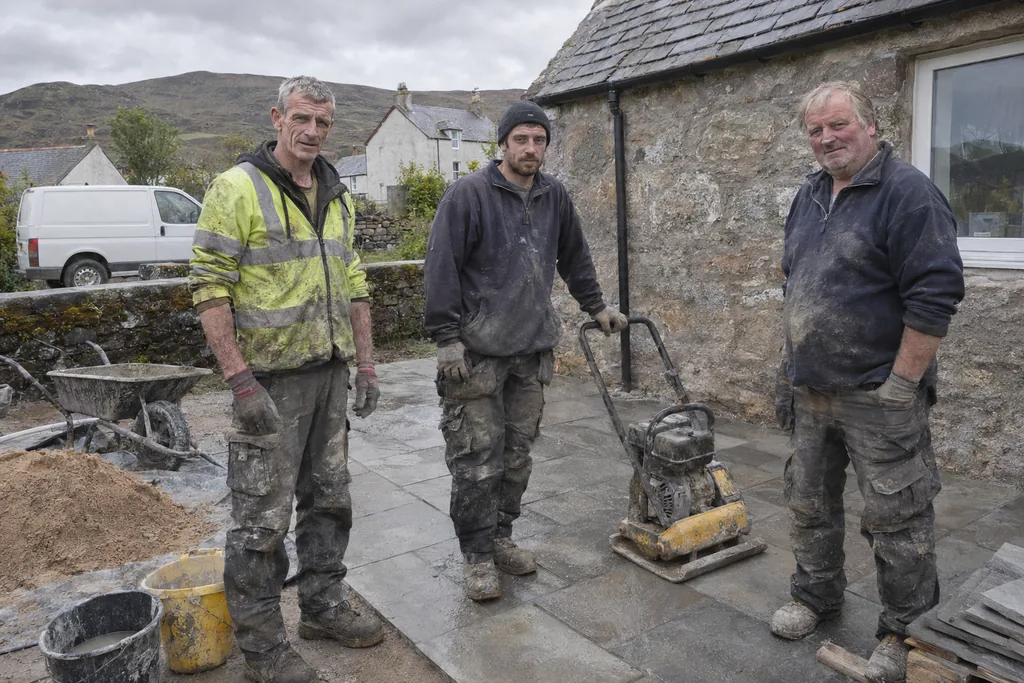
Who will be at the gate
Talk to us first, on the phone. The about page says a little more.
Owner: Iain McKenzie
Iain McKenzie is the owner and takes your call.
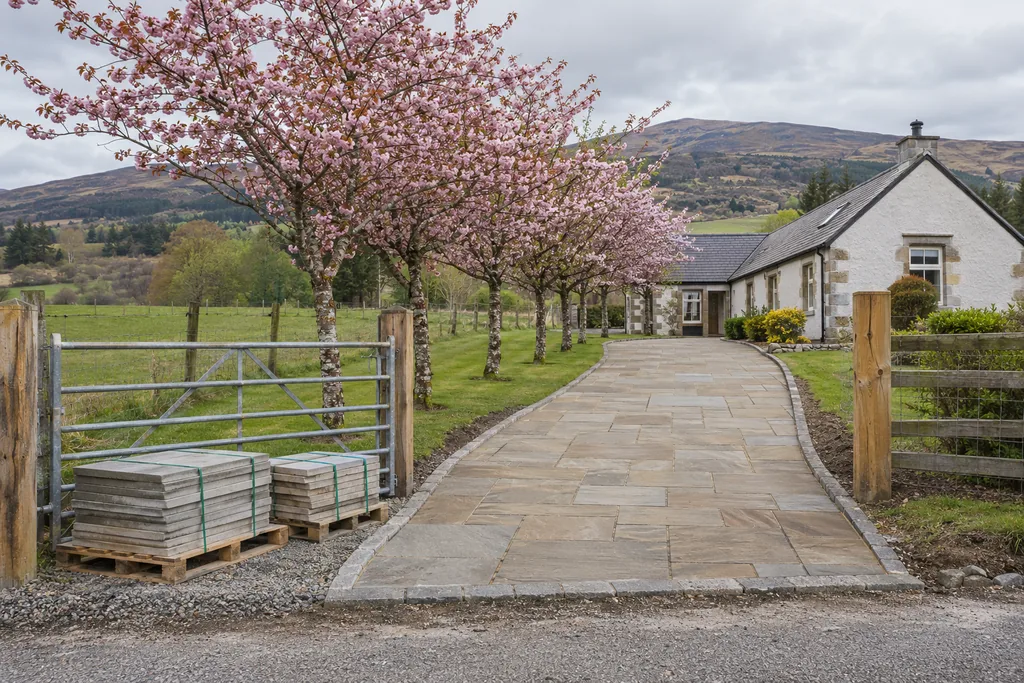
Long roads and rural plots
Plenty of Highland homes sit up a private track or at the end of a single-track road. Pallets of slab need a lorry with room to turn, and a tight track can mean carrying material by hand. Tell us the road, the postcode and how a lorry would reach you.
What moves a Highland paving quote
Two gardens never match, so the cost page sets out UK guide prices and what moves a quote. See what affects paving costs in Inverness.
Inverness and the towns around it
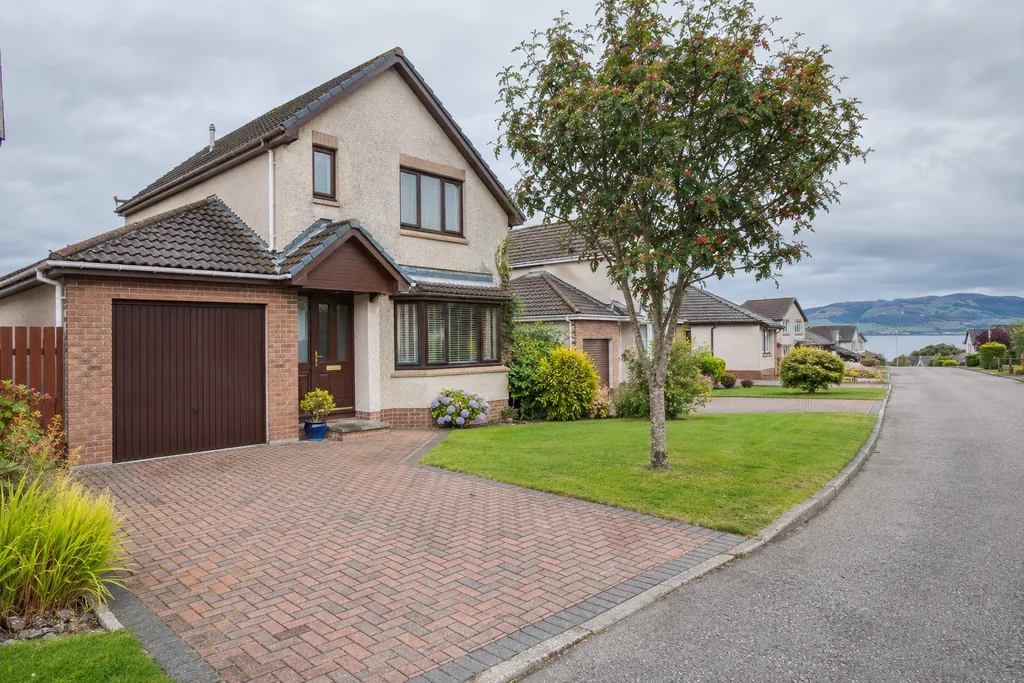
Ring with your postcode and we will say whether we can come.
Straight answers on Inverness paving
Will paving survive a Highland winter?
It will if the base drains and the surface falls away from the house. Frost damage comes from trapped water. We build to avoid that. Choose a slab with a frost rating from the maker, and ask us which ones we suggest.
Do I need planning permission to pave my front garden?
Possibly, if the surface sits between the house and the road, or the house is in a conservation area. Read the Scottish Government guidance (mygov.scot, updated 18 November 2025), which adds that a surface facing the road should be porous or drain to a lawn or border. Highland Council lists thirty conservation areas and says extra planning rules apply there (council page, last modified 22 July 2025). Check with Highland Council. Around Inverness the conservation areas include Crown, Riverside, Clachnaharry, Culloden Muir and Culloden House and Policies (Highland Historic Environment Record, read 24 November 2026). A new drive across the pavement needs a road opening permit from the council's roads team, which lists installing a dropped kerb as an example of minor works (council page, last modified 30 April 2026).
My drive is gravel. Can you replace it?
Yes, that is a common job. Gravel comes out, a stone base goes in and block paving is laid with a firm edge. See block paving.
Can you work on a sloping plot?
Often, using steps, a level platform or both. Our guide to laying in frost and rain explains how we plan it.
Do you come out to villages and farms?
Ring and tell us where you are.
What should I tell you when I ring?
Your postcode, a rough size, what the surface is now and how a lorry would reach you.
Ask about your garden or drive
Put in your postcode and what you want laid, and one of us will reply.