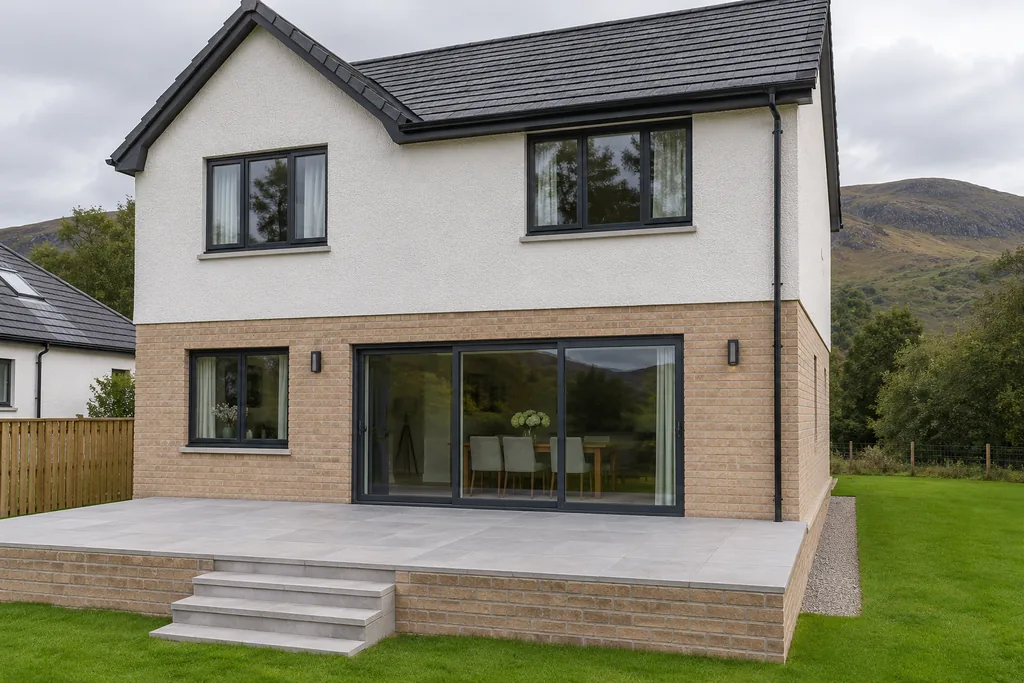
Porcelain paving
in Inverness
Slabs that shrug off rain, wipe clean and keep their colour.
- Dense, frost-rated and slow to stain
- Dries fast after Highland rain
- Ask by phone or send a short form
What porcelain does well
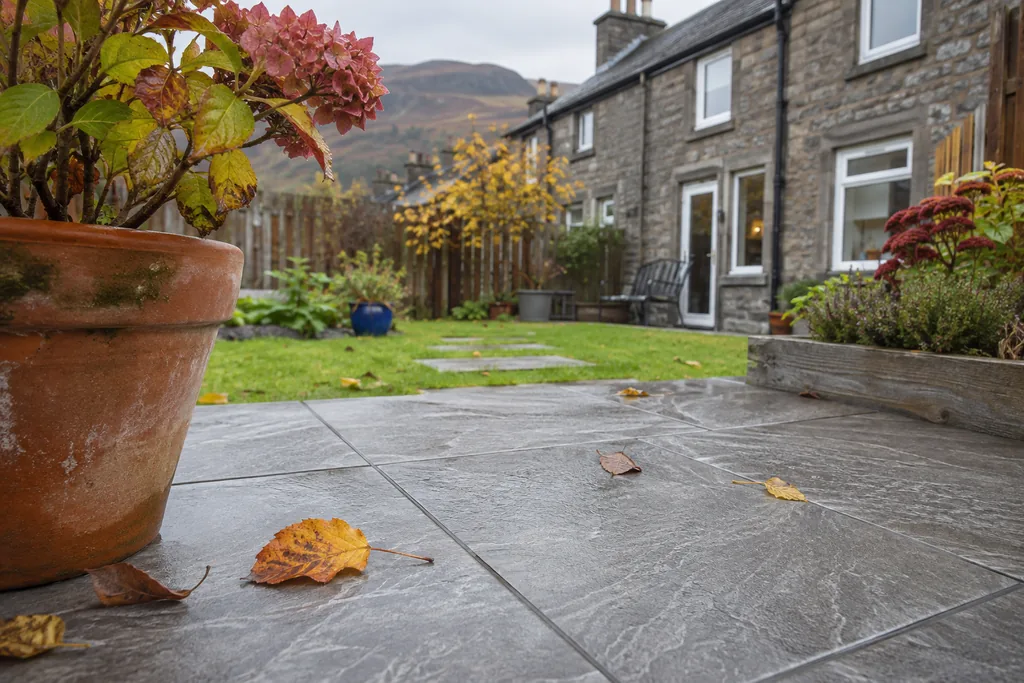
Porcelain is fired at high temperature, so the slab is very dense. It takes in almost no water, there is little for frost to work on, and moss finds it hard to grip. It comes in stone, concrete and wood looks.
Where it suits the Highlands
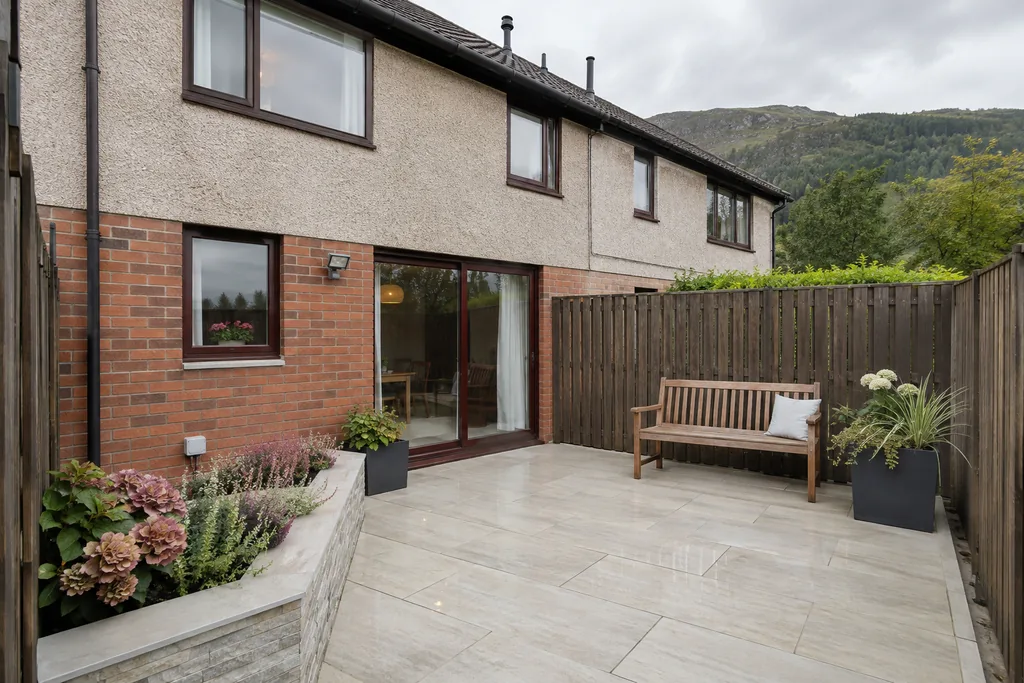
Porcelain suits a crisp, easy-care finish.
- Sheltered courtyards. Shade and damp make some stone mossy; porcelain stays cleaner.
- Modern new builds. Clean lines sit well beside large windows and cladding.
- Family gardens. A spilt drink wipes straight off.
Beside a rough dry-stone cottage wall, sandstone can blend in better. Ask the supplier for the outdoor slip rating.
How porcelain is laid
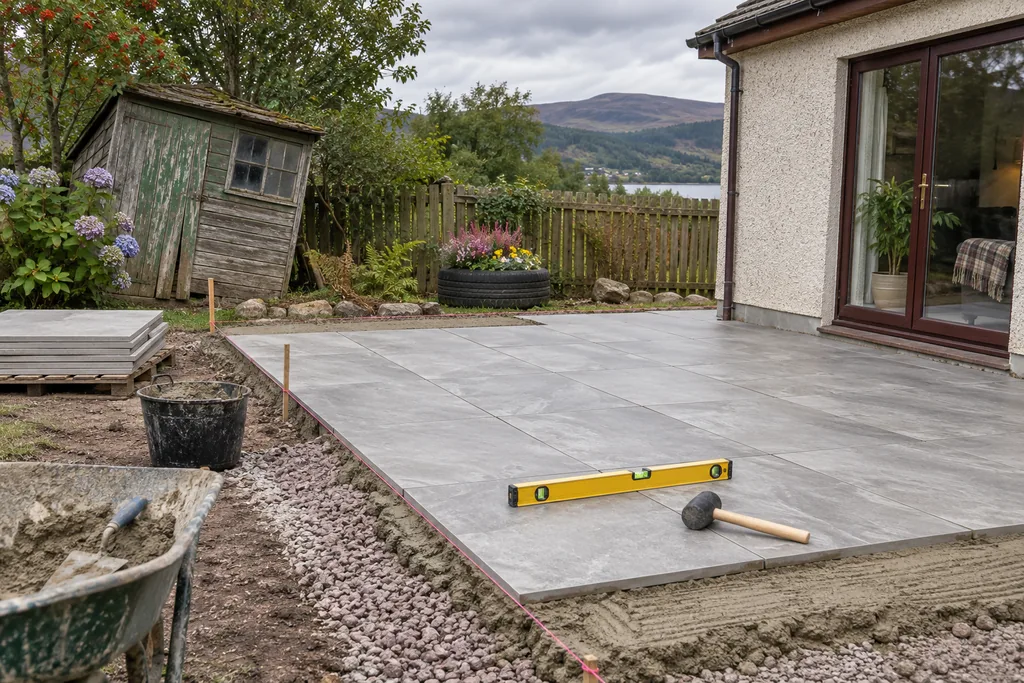
Porcelain is thin and hard, and it does not forgive an uneven base.
Cuts need the right blade and a steady hand.
Porcelain paving questions
Does porcelain crack in a Highland frost?
Good-quality outdoor porcelain is made for frost. The risk is a poor base that holds water. Build it to drain, and ask the supplier for the frost rating.
Is porcelain slippery when wet?
Some finishes are. Choose a slab with an outdoor grip rating, and tell us if the area is a steep path or a step.
Does porcelain need sealing?
Usually not. Check the supplier's advice for your product.
Can porcelain be used for paths and steps?
Yes, with the right grip rating and a firm base. See garden paths.
Is porcelain dearer than other slabs?
It can be, because it is a specialist product. The base and the labour matter just as much. See paving costs.
How do I order porcelain paving?
Ring 07700 175069, or send the short form.